Laparoscopic Gallbladder Stone Surgery
Your gallbladder is a pear-shaped organ that stores bile, the fluid that helps digest food. If it’s not working the way it should (or your bile gets out of balance), hard fragments start to form. These can be as small as a grain of rice or as big as a golf ball.
Gallstones don’t go away on their own. If they start to hurt or cause other symptoms, your doctor may decide to remove your gallbladder. This type of surgery is called a cholecystectomy. It’s one of the most common surgeries doctors perform.
About 80% of people who have gallstones will need surgery.
Laparoscopic Surgery
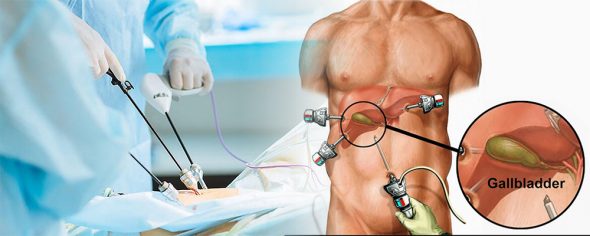
Laparoscopic gallbladder surgery (cholecystectomy) removes the gallbladder and gallstones through several small cuts (incisions) in the abdomen. The surgeon inflates your abdomen with air or carbon dioxide in order to see clearly.
The surgeon inserts a lighted scope attached to a video camera (laparoscope) into one incision near the belly button. The surgeon then uses a video monitor as a guide while inserting surgical instruments into the other incisions to remove your gallbladder.
Before the surgeon removes the gallbladder, you may have a special X-ray procedure called intraoperative cholangiography, which shows the anatomy of the bile ducts.
You will need general anesthesia for this surgery, which usually lasts 2 hours or less.
After surgery, bile flows from the liver (where it is made) through the common bile duct and into the small intestine. Because the gallbladder has been removed, the body can no longer store bile between meals. In most people, this has little or no effect on digestion.
In 5 to 10 out of 100 laparoscopic gallbladder surgeries in the United States, the surgeon needs to switch to an open surgical method that requires a larger incision.footnote 1 Examples of problems that can require open rather than laparoscopic surgery include unexpected inflammation, scar tissue, injury, and bleeding.